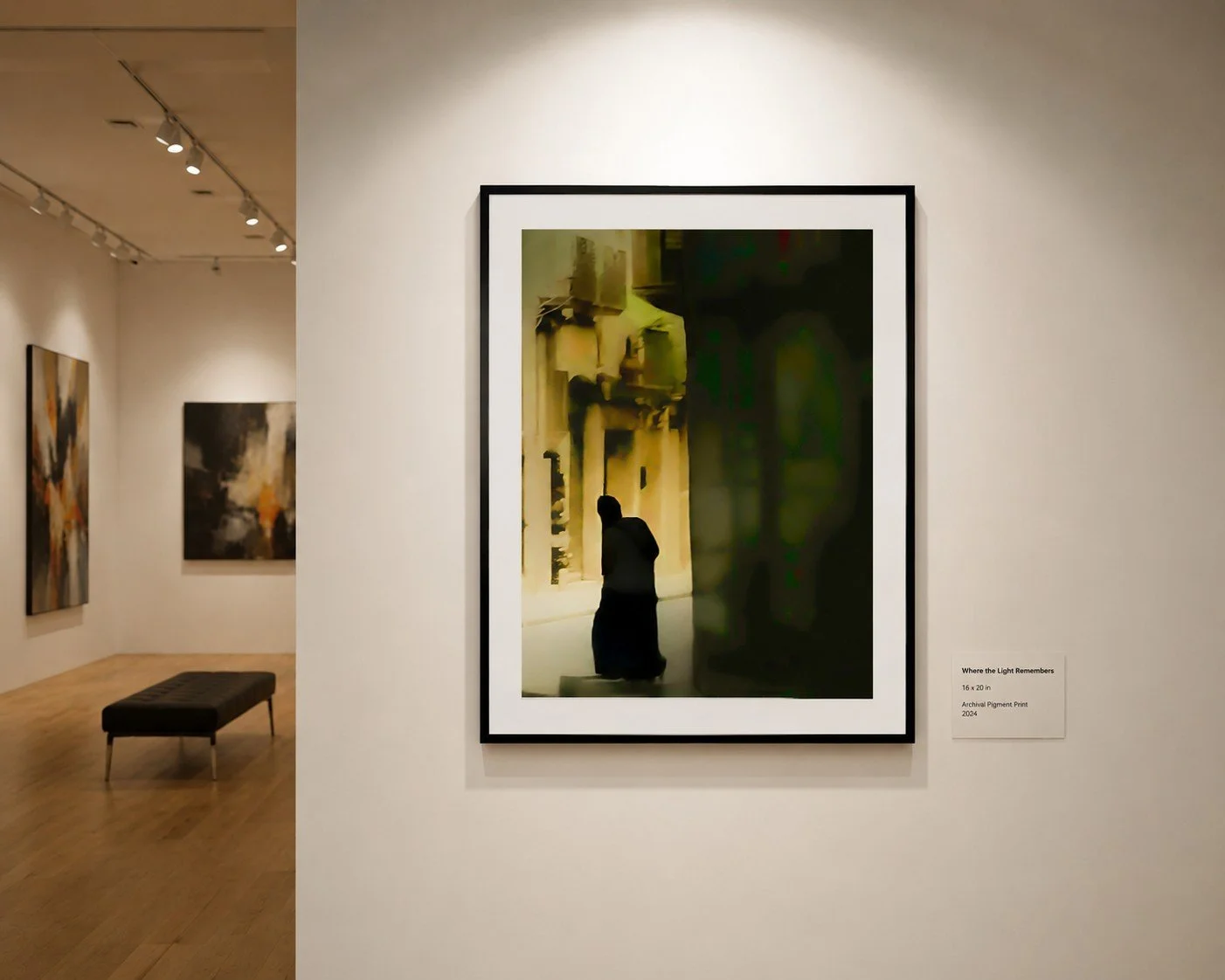
Where the Light Remembers
There are places we pass through only once, yet they remain with us for years.
The narrow passage was quiet except for the faint glow spilling from unseen windows above. A solitary figure moved slowly through the light, neither arriving nor leaving, but suspended in a moment that seemed untouched by time. The walls held the warmth of the day, while the shadows gathered like memories in the corners, softening the boundaries between what was real and what was remembered.
Years later, the details of the street would be forgotten—the names, the doors, the destination. Only the feeling remained: a brief encounter with stillness, a sense that light itself was carrying a story. In that fleeting passage between darkness and illumination, the ordinary became something enduring, a reminder that some journeys leave their mark not on the places we visit, but on the quiet spaces within us.
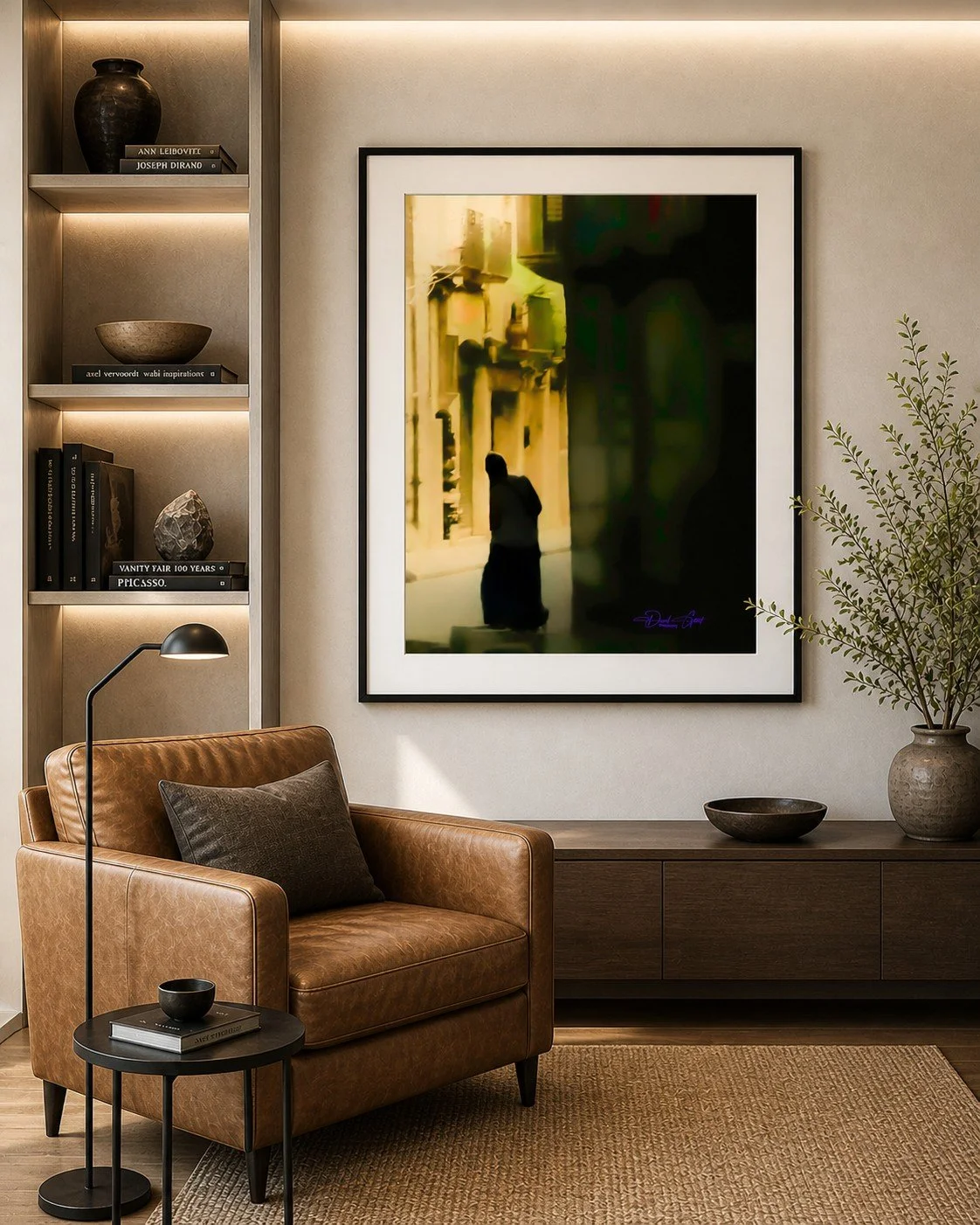
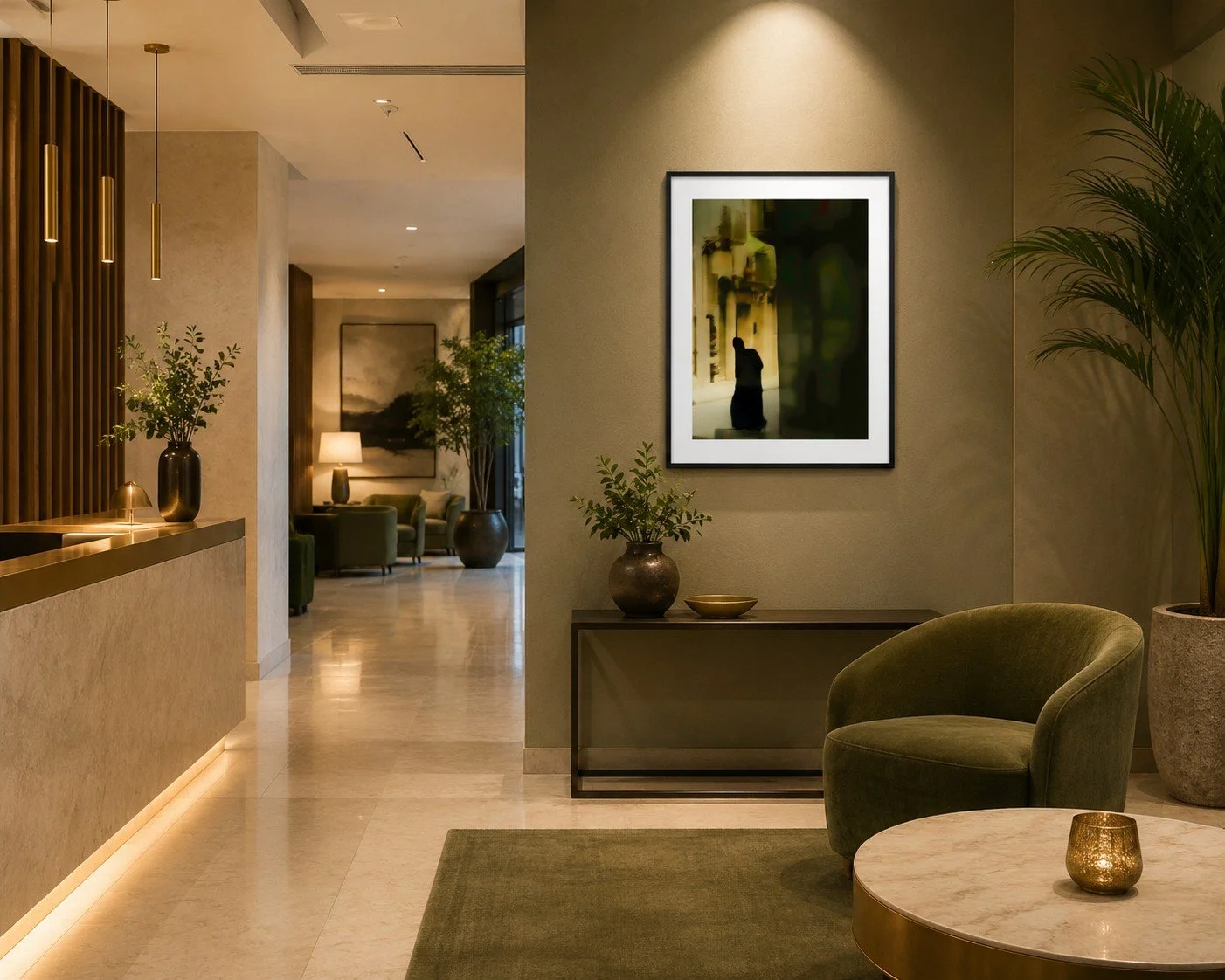
Recommended Print Size Small Office 16×20 Residential Hallway 20×25 Luxury Living Room 24×30 Hospitality Lobby 30×38 larger Gallery Exhibition 36×45+
Lighting Recommendations
The piece benefits from:
2700K–3000K lighting
Soft museum-style picture lighting
Adjustable ceiling spots with a 25–35° beam spread
Avoid cool LEDs above 3500K, which can flatten the warmth and cinematic glow.
Materials That Complement
Honed limestone
Travertine
Light oak
Walnut
Bronze accents
Patinated brass
Matte black steel
Natural linen textiles
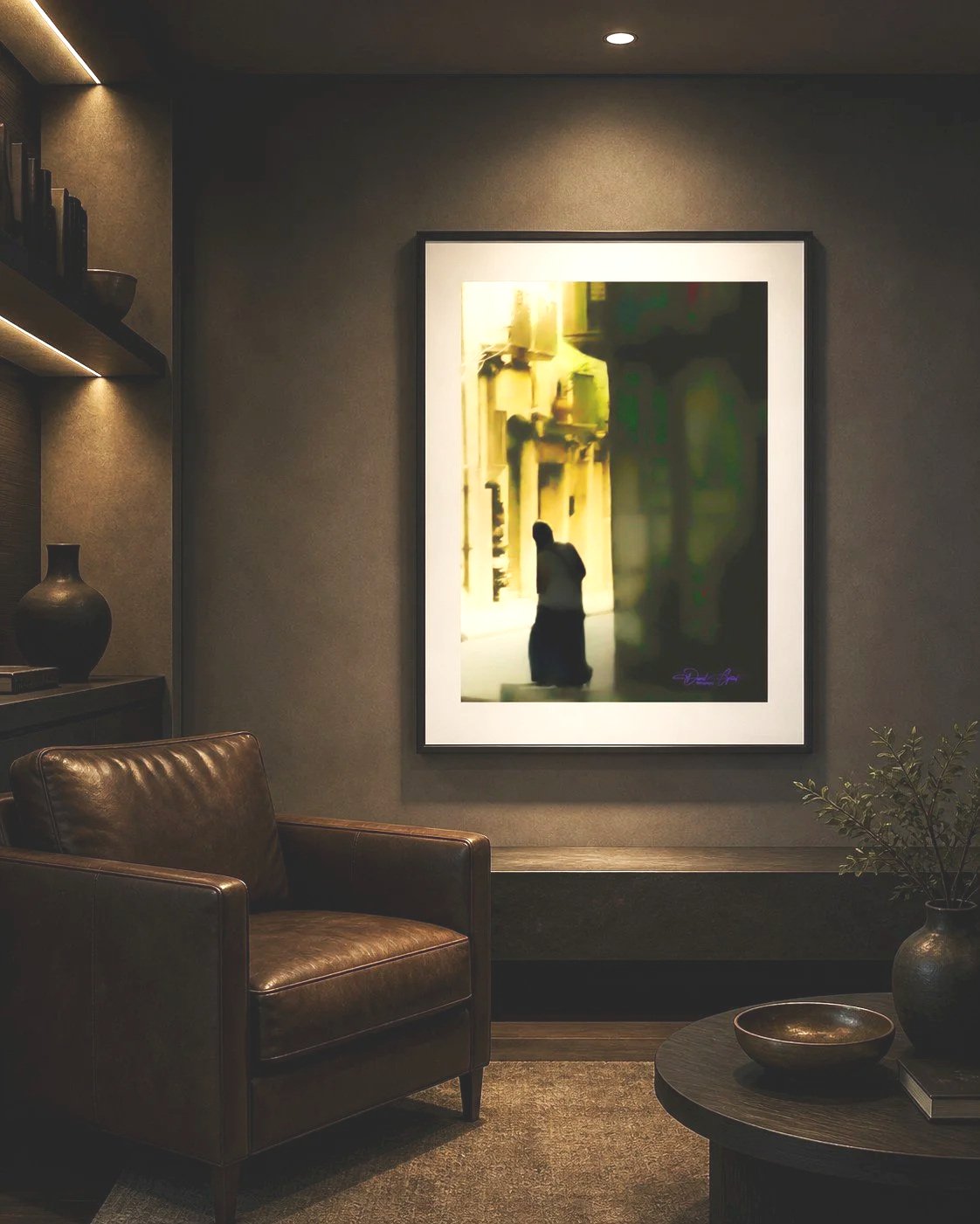
The artwork's warm golds and muted green-black shadows harmonize particularly well with natural stone and warm woods.
Wall Colors
Warm ivory
Soft limestone
Mushroom taupe
Light greige
Pale olive-gray
Warm plaster finishes
Avoid stark bright white walls, which can make the image feel overly contrasty and diminish its subtle tonal transitions.
Designer's Curatorial Note
This is not a "match-the-sofa" artwork. Its strength lies in creating mood and emotional depth. Surround it with restraint—simple forms, natural materials, and generous negative space. The more breathing room it receives, the more compelling it becomes.
A designer should think of this piece as visual poetry: it rewards quiet environments and sophisticated lighting rather than busy, highly decorative settings.